The Agentic Analytics Playbook is out
Learn how to choose your harness, build your context layer, plan your rollout, measure success, and get examples from 7 real-life companies.
16 July 2026
By ClaireCo-founder & CEOWe spent the last few months studying how companies actually build analytics agents that work - not demos, not prototypes, but agents that hundreds or thousands of people use every day.
The result is the Agentic Analytics Playbook: 52 pages of architectures, context strategies, and a complete method you can apply to your own stack.
How this playbook helps
Every data team wants to set up agentic analytics. But there's still no industry consensus on how to do it. Which tool to use? Build or buy? What context to give your agent? How to measure reliability? How to maintain it through time?
This guide takes you step by step through those decisions, with a complete context engineering strategy you can apply to your own stack. You'll learn how to build, test, and iterate on your agent's context layer - the part that actually makes analytics agents reliable.
The goal isn't just production-level. It's trust-level: an agent your business team actually uses, that decreases your data team's workload for good.
What you get
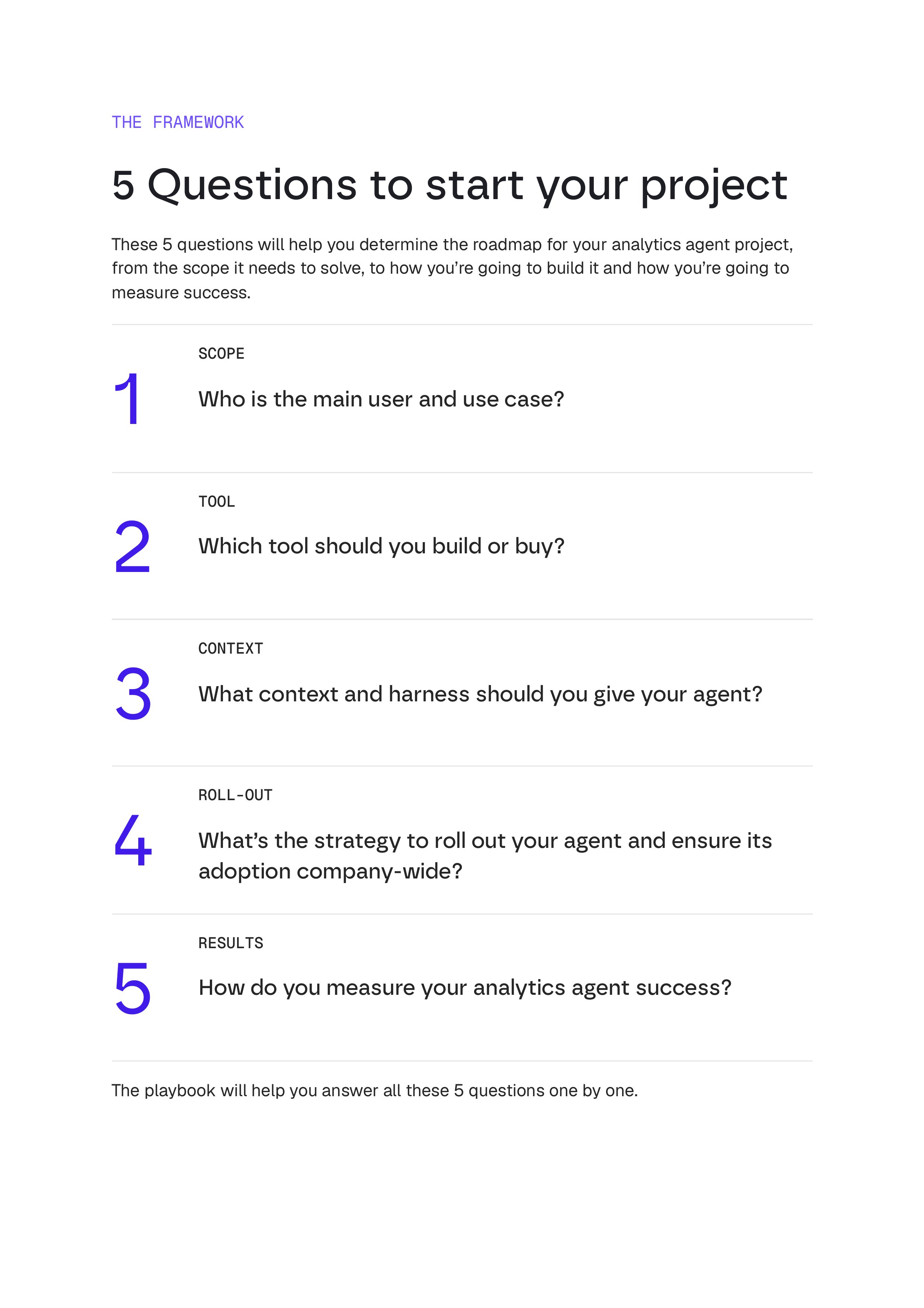
A step-by-step roadmap. Setting up an analytics agent isn't a single project - it's a sequence of phases, and skipping ahead is how most teams stall. The playbook lays out five phases, from scoping your first use case to rolling out company-wide. Each phase comes with clear exit criteria, so you always know whether you're ready to move forward or need to keep iterating. You'll see what to prioritize early (a narrow, high-value use case with clean data) and what to defer until later (broad coverage, self-serve access, org-wide rollout).
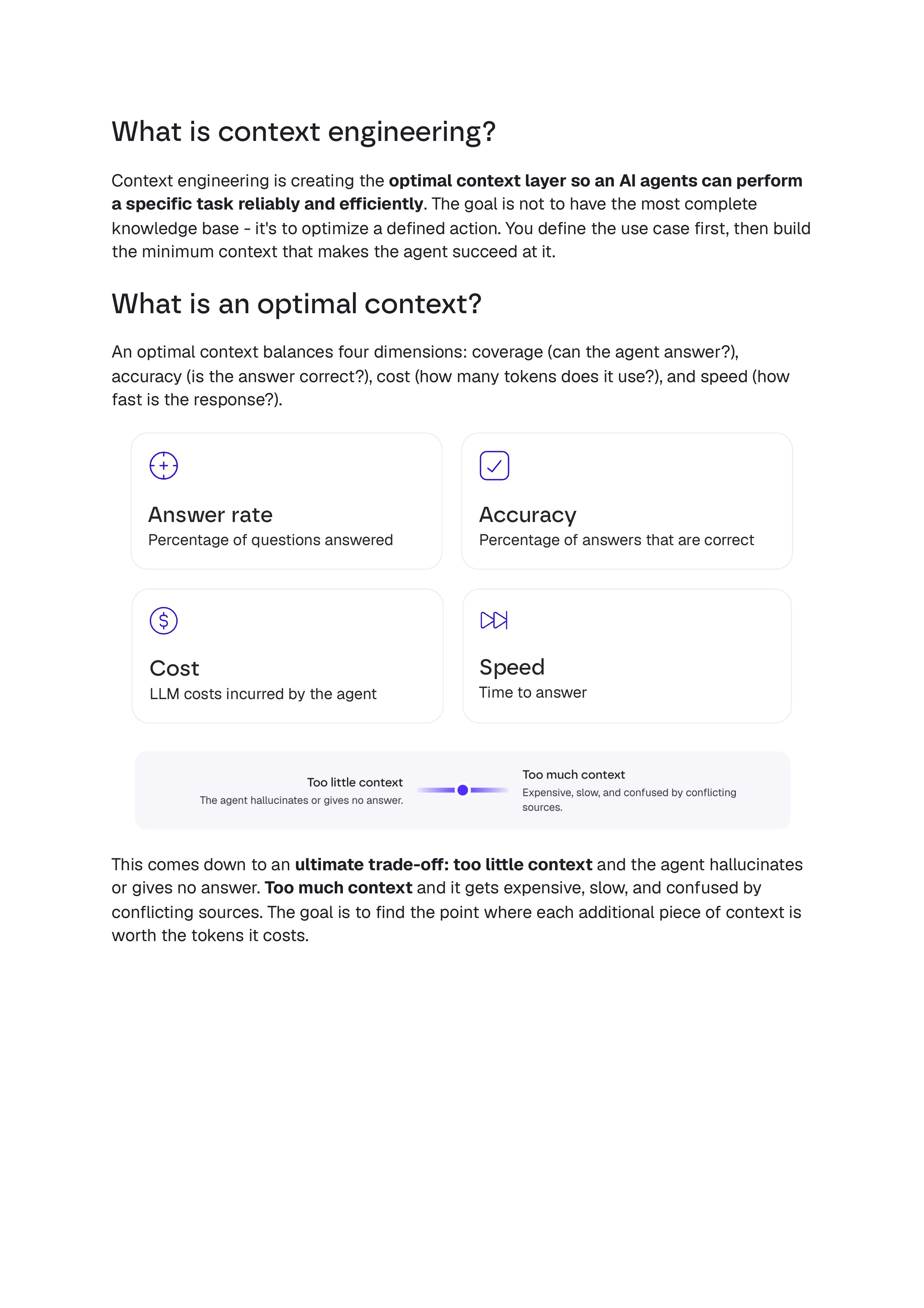
A context engineering method. The model is rarely the bottleneck - the context is. The playbook walks you through the 5-step iterative loop we use to build, test, and improve an agent's context layer: define what "correct" looks like, run the agent against it, diagnose the failures, fix the underlying data and documentation, then measure again. It's the same method that took our own agent from 17% to 86% accuracy, and it works regardless of the tool you've picked.
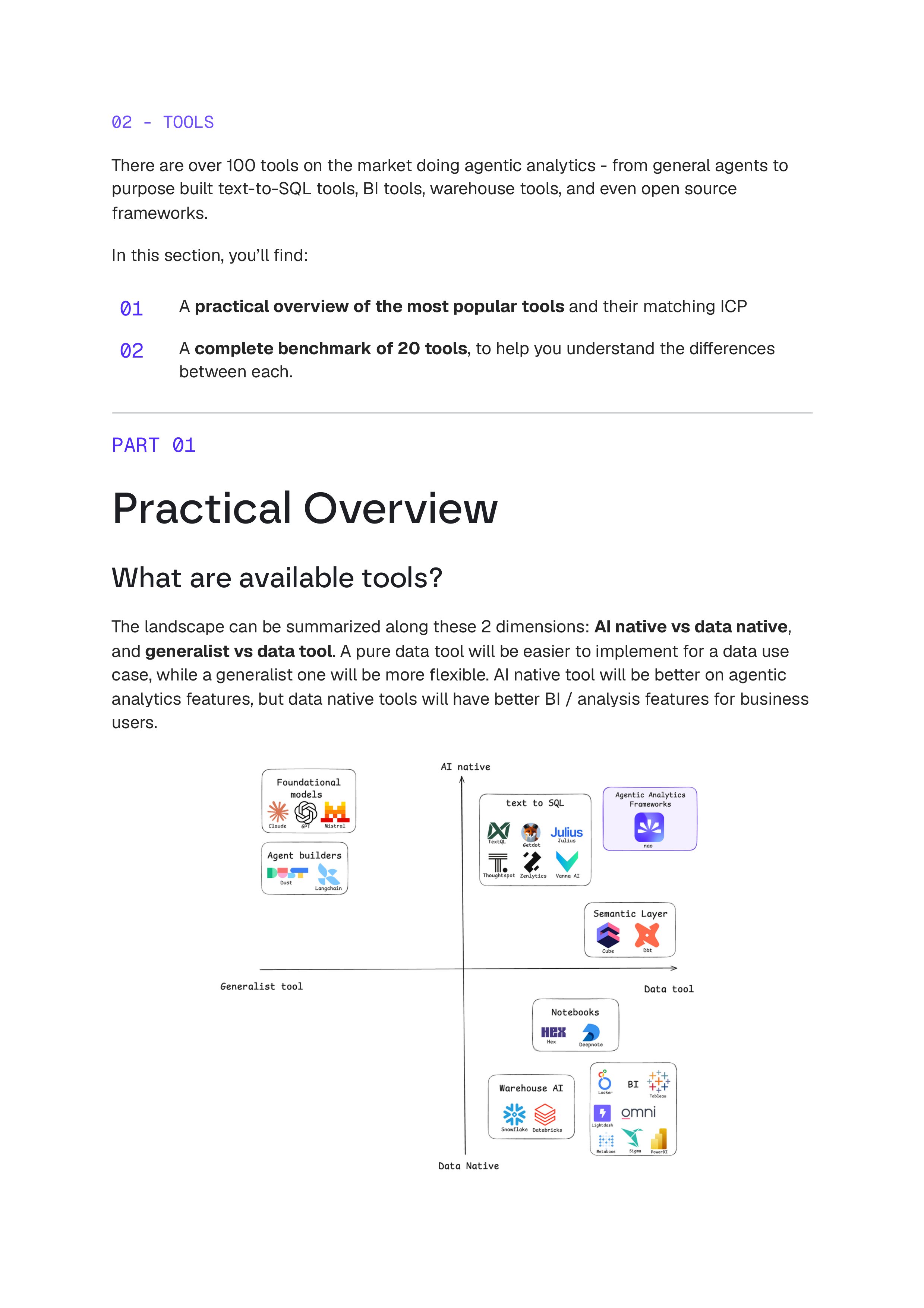
A benchmark of 20+ tools. Build or buy is the first question every team asks, and the honest answer depends on your stack, your team, and your data maturity. The playbook compares 20+ agentic analytics tools on reliability, cost, speed, and data-team fit - from Snowflake Cortex and Databricks Genie to LangChain and nao - so you can shortlist the options that make sense for you instead of trialing all of them.
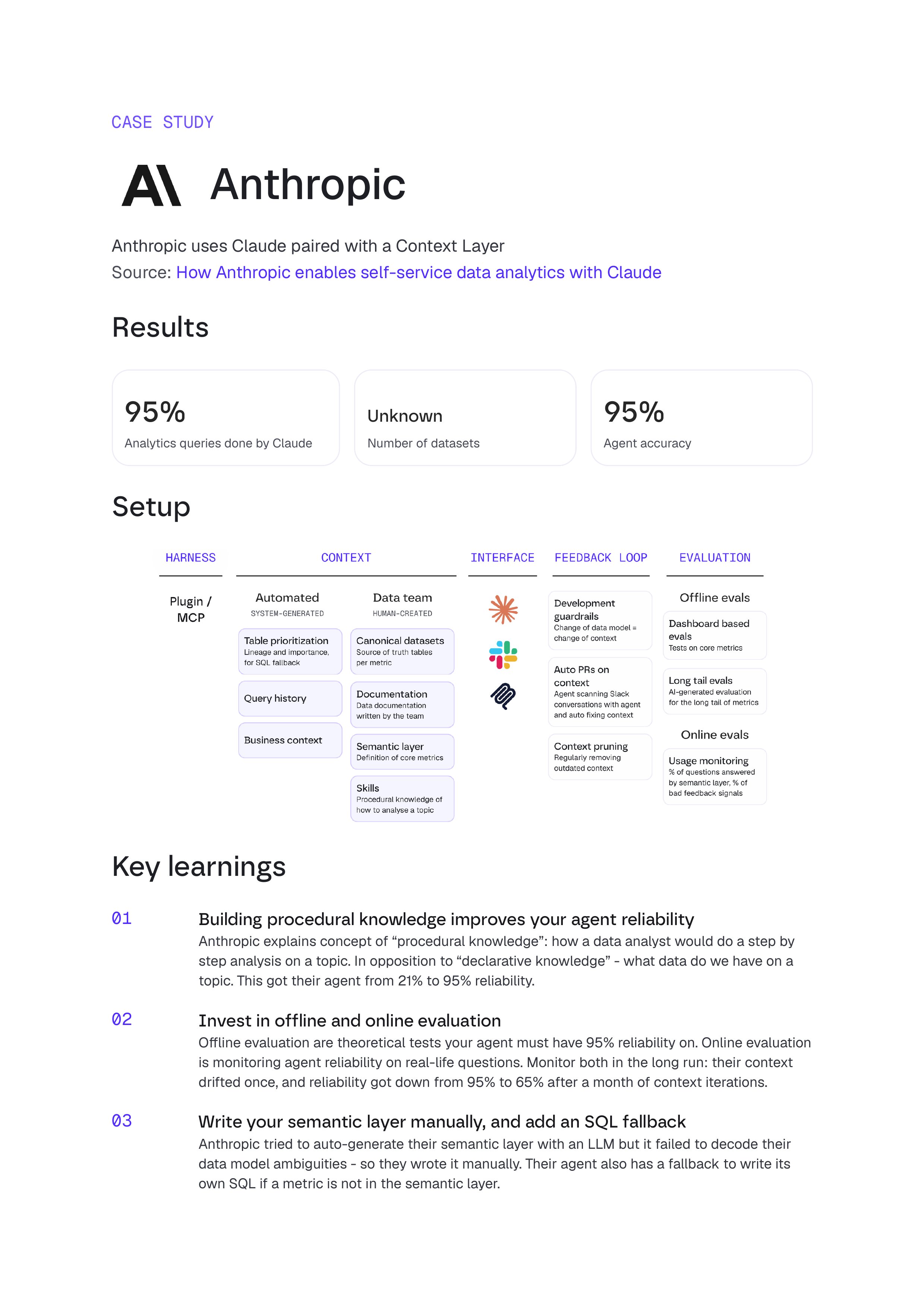
7 real company examples. Frameworks are useful, but seeing how real teams applied them is what makes them stick. We break down how OpenAI, Anthropic, Lyft, Gorgias, Ramp, Vercel, and nao built agents their teams actually use - the stack they chose, the context strategy behind it, the results they measured, and the key learnings you can borrow. Different company sizes, tech stacks, and data maturity levels, so you can find the setup closest to your own.
Who this is for
- Heads of Data who want to sharpen their agentic analytics roadmap
- Data teams who want to go past the POC phase
- Data engineers evaluating frameworks and context strategies
- CTOs comparing build vs buy for analytics agents
Get the playbook
The full playbook is free. Get it here.
If you're building an analytics agent and want a framework that works with your existing data stack, try nao - it's open source and gives you most of the scaffolding described in this playbook out of the box.
Related articles
product updates
We're launching the first Open Source Analytics Agent Builder
We're open sourcing nao — an analytics agent framework built on context engineering. Here's our vision for what comes after black-box BI.
product updates
nao has a new look
We rebuilt the nao interface from the ground up. New home screen, a prompt queue, visible agent reasoning, redesigned charts and stories.
product updates
Launching nao context recommendations
nao now audits its own usage and tells you exactly where your context is missing, wrong, or unclear - then opens the fix as a pull request in your context repo.

Claire
For nao team